When, where and what did you play the first time with the English Concert?
It was a few months before I started my work as a leader in 2007. It must have been Andrew Manze’s last concert as a violinist with the orchestra and he invited me as the principal second violin for a concert at the Handel Festspiele in Halle. The piece I most remember from that programme wasn’t by Handel though, it was “Ach dass ich Wassers gnug hätte” by Johann Christoph Bach with Michael Chance as the alto soloist.
What has been your most memorable TEC concert and why?
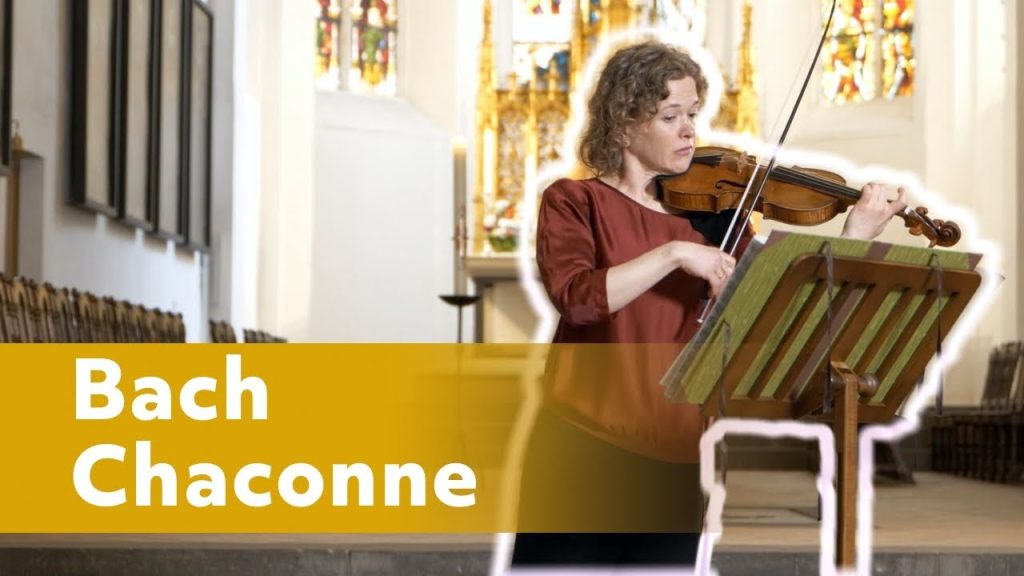
It was probably our performance of Bach’s B Minor Mass in the Thomaskirche in Leipzig. It was my very first violin solo for the Laudamus Te and to play it where Bach would have stood was an amazing experience. Now that I live in Leipzig the Thomaskirche has become very familiar as it has become the church where I attend the services with my children when I am back home. To listen to the Thomanerchor there, to sing all those chorals throughout the church year with the “Gemeinde” and sometimes even play the violin means a lot to me, but I will never forget that first b minor mass!
What’s one of your favourite pieces of music and why?
Same as last question: Bach’s B Minor Mass. The piece has accompanied me through some very emotional and sometimes difficult moments in my life and its structure, variety of styles, emotional width, sensuality in colours and atmospheres and the inner journey give me great emotional stability and mental balance every time I play it.
Do you have a secret interest or hobby that would surprise people?
I don’t think it is very secret if you write it down here… I enjoy doing yoga, love cooking for my family and on tour I like going to art museums and exhibitions. I used to be into dancing tango, but stopped after I had children as I was constantly too tired. I might take it up again soon though, but need some lessons to retrieve my buried knowledge of it first!
Biography
At the core of Nadja Zwiener’s music-making is direct communication with the audience — an exchange that leaves both performer and listener physically, emotionally, and intellectually moved.
Although she grew up in an academic and scientific household, her parents instilled in her a conviction that art and culture bind life together and give significance to learning; that music, above all, enriches our emotional connections with humanity.
A large part of Nadja’s musical education was spent as a founding member of the Kuss Quartett at the Musikgymnasium Carl Philipp Emmanuel Bach. At the quartet’s inception, the three upper voices swapped roles — meaning that, already as a teenager, Nadja learned to make music as a conversation between equals. That approach remains central to her work as an orchestral leader.
A desire to immerse herself in a different culture, along with the new freedoms of travel that followed the fall of the Berlin Wall, brought her to London for postgraduate studies at the Guildhall School. It was there that she had her defining encounter with Baroque performance. Asked to play in the band for Monteverdi’s Vespers, she initially assumed the music would feel too dry and remote to move her. What followed was a revelation: the combination of instruments and voices, the richness and clarity, the unfamiliar timbres and harmonic structures — and above all, a way of working that brought singers and instrumentalists together as true collaborators, combining the thrill of large-scale music-making with the intimacy of chamber music.
These experiences continue to shape her work as leader of The English Concert, a position she has held since 2007, where she moves fluidly between the roles of leader, chamber musician, and concerto soloist. As a Thuringian living in Leipzig, she feels a particular affinity with the music of Bach, and served as concertmaster of the Bachakademie Stuttgart from 2016 to 2022, where she helped build the Gaechinger Cantorey on original instruments. She regularly appears as guest leader with B’Rock and other period ensembles, and has developed a distinctive strand of solo and chamber programming that brings early music into dialogue with improvisation, electronics, contemporary music, literature, and dance.
Her solo recordings have been warmly received: Senza Basso — Auf dem Weg zu Bach (Genuin, 2021) and 1723 with Johannes Lang (Ramée, 2023). Her work in Leipzig also led to the founding of a new early music ensemble at the Thomaskirche, the Collegium Musicum ’23, whose debut recording explores Bach’s Art of Fugue on period instruments.
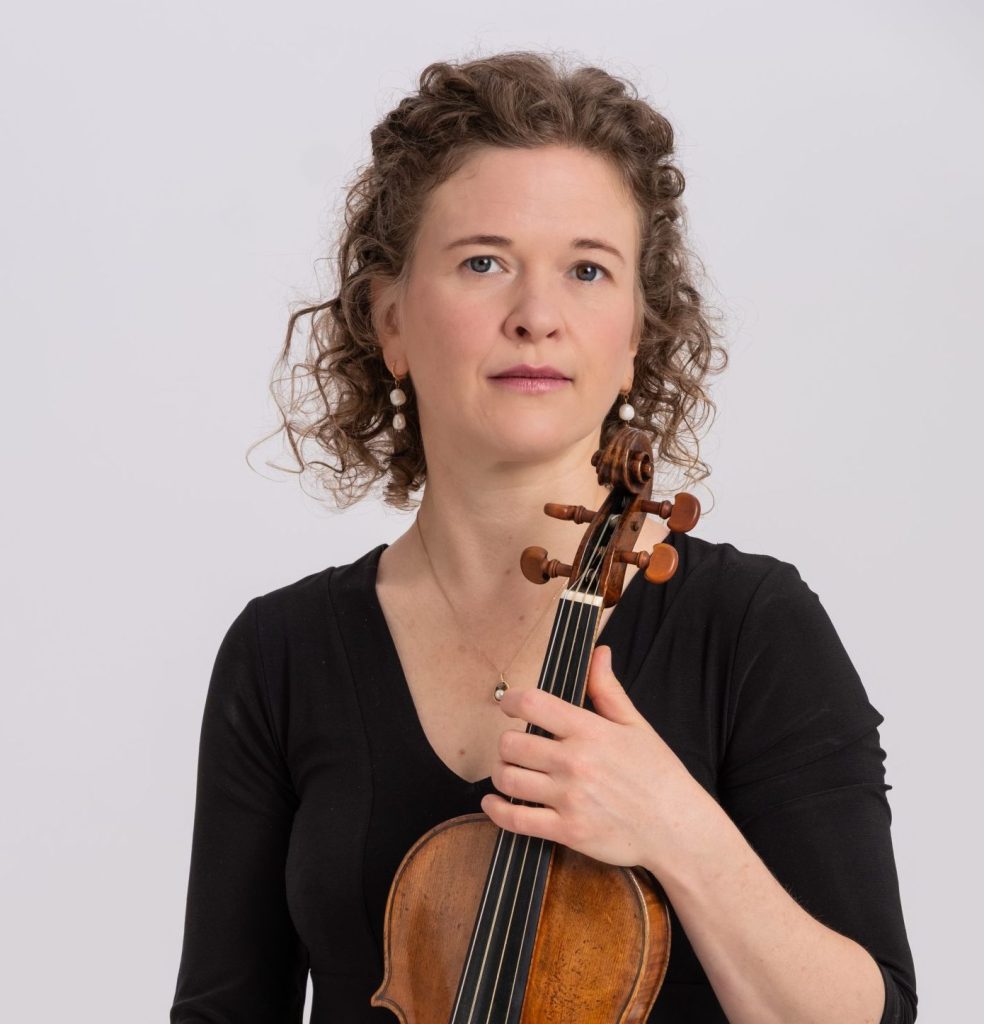
Nadja plays a violin by David Tecchler (Rome, 1723).